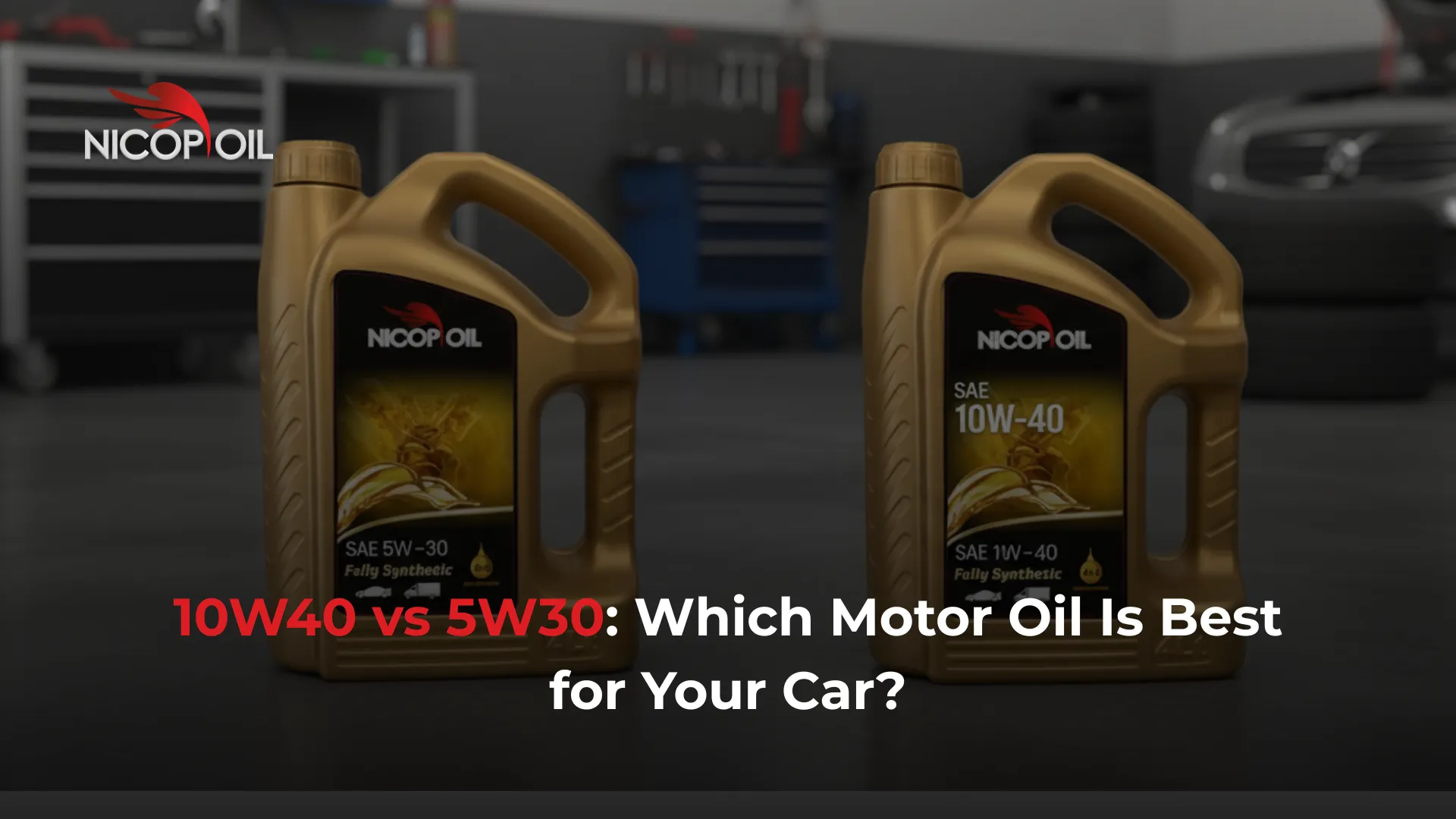
Choosing the right engine oil can feel confusing, especially when you’re comparing two popular grades like 10W40 vs 5W30. Every driver wants smoother performance, longer engine life, and fewer repair bills, but understanding which oil truly suits your car is the key.
In this detailed guide, we break things down in simple language, real-life examples, and helpful steps so you can confidently pick the best oil for your vehicle. Along the way, you’ll see why thousands of drivers trust Nicop Oil for protection, performance, and peace of mind.
Why Oil Choice Matters More Than You Think
Engine oil is not just a liquid, it’s your engine’s lifeline. It cools, cleans, lubricates, and protects every moving part inside. Many drivers in Africa, Europe, Cameroon, and beyond often ask the same big question:
“What’s better for my car: 10W40 vs 5W30?”
The truth? Both oils are great individually, but they suit different engines and climates. And choosing the wrong one may affect fuel efficiency, cold starts, and engine wear.
Before diving deep, here’s a quick story…
A Small Anecdote Every Driver Can Relate To
Last year, a customer from Douala drove into a mechanic shop complaining about rough cold starts every morning. He had been using 10W40 for years. The mechanic asked, “Why this engine oil grade?”
He replied, “Because someone told me it’s thicker, so it must be better.”
But after a short inspection, the mechanic switched him to 5W30, and within two days, the car felt lighter, smoother, and more fuel-efficient.
This is exactly why understanding 10W40 vs 5W30 is essential, because choosing the right oil can instantly improve your everyday driving experience.
What Do Oil Grades Mean? (Quick Explanation)
The numbers in motor oils such as 10W40 vs 5W30 tell you how the oil flows in different temperatures.
- 10W → the “winter” viscosity (cold start thickness)
- 40 or 30 → the viscosity at engine operating temperature
So in simple words:
- 5W30 is thinner and flows faster, especially in cold weather.
- 10W40 is thicker and protects better in high-temperature environments.
If you live in a hot region like Central or West Africa, or you drive older vehicles, higher-viscosity oils may suit you better.
If you live in cooler areas or drive newer vehicles, low-viscosity oils help with performance and fuel economy.
Deep Comparison: 10W40 vs 5W30
Let’s break it down using important factors:
1. Cold Start Performance
- Flows quicker during cold start
- Ideal for early morning ignition
- Reduces engine strain
Best for cold or moderate climates.
- Slightly thicker during cold start
- Takes a little longer to circulate
Works fine in warm/hot climates.
Winner: 5W30 for cold regions
But both perform well in hot climates depending on your engine type.
2. High-Temperature Protection
10W40
- Higher viscosity at hot temperatures
- Better for older or high-mileage engines
- Reduces oil burn-off
- Great for long highway drives
5W30
- Works best for new engines
- Offers enough heat protection for modern vehicles
- Improves overall efficiency
Winner: 10W40 for extreme heat & older engines
3. Fuel Efficiency
5W30
- Lighter oil
- Helps engine move with less resistance
- Boosts MPG
10W40
- Thicker
- Slightly reduces fuel economy
Winner: 5W30 for mileage
4. Engine Type Suitability
Best for Modern Engines → 5W30
Modern engines have smaller internal clearances, so thinner oils work perfectly.
Best for Older Engines → 10W40
Older engines may produce more heat and require thicker oil.
5. Climate Suitability
| Climate | Recommended Oil |
|---|---|
| Cold | 5W30 |
| Moderate | 5W30 or 10W40 |
| Hot | 10W40 |
| Very Hot | 10W40 |
6. Engine Wear Protection
Both oils protect well, but:
- 10W40 provides a thicker protective film at high temperatures
- 5W30 reduces friction at lower temperatures
Depending on your daily driving, either can be the right choice.
Step-by-Step Guide: How to Choose Between 10W40 vs 5W30
Follow this easy guide:
Step 1: Check Your Owner’s Manual
Your manufacturer provides the best recommendation.
Look for recommended oil viscosity inside.
Step 2: Consider the Climate You Live In
If your mornings are cold, choose 5W30.
If you experience hot weather, choose 10W40.
Step 3: Check Your Engine Age
- New engine (below 100,000 km) → 5W30
- Older engine (100,000+ km) → 10W40
Step 4: Think About Your Driving Style
- Short city trips → 5W30
- Long high-temperature highway trips → 10W40
Step 5: Pick a Trusted Brand Like Nicop Oil
Because the brand matters as much as the grade.
Nicop Oil is known for high-quality synthetic and semi-synthetic oils designed for performance, heat resistance, and engine longevity.
Why Nicop Oil Is the Best Choice for Both 10W40 and 5W30
When comparing 10W40 vs 5W30, your final decision becomes stronger when you choose a top-quality brand. Nicop Oil ensures:
- Superior synthetic formula
- Excellent thermal stability
- Reduced engine wear
- Compatible with modern and older engines
- Longer drain intervals
- Cleaner combustion & smoother performance
Thousands of drivers trust Nicop Oil because our products are tested for real-road conditions in Africa, Asia, the Middle East, and Europe.
When Should You Use 10W40?
Choose 10W40 if you:
✓ Drive in hot climates
✓ Have an older engine
✓ Notice oil burning
✓ Want stronger high-temperature protection
✓ Drive long distances daily
When Should You Use 5W30?
Choose 5W30 if you:
✓ Drive a modern engine
✓ Want better fuel economy
✓ Live in cold or moderate climates
✓ Want smooth morning starts
✓ Drive mostly inside the city
FAQs
Can I switch from 10W40 to 5W30?
Yes, you can switch as long as your owner’s manual approves it.
However, older engines with high mileage usually perform better on 10W40 because it’s thicker.
Is 5W30 good for hot weather?
Yes, 5W30 works well in warm climates, but if temperatures get very high or your engine is older, 10W40 may provide stronger protection.
Does 10W40 improve engine life?
10W40 can help reduce engine wear in older engines because its thicker viscosity protects parts better at higher temperatures.
Which oil gives better fuel economy, 10W40 or 5W30?
5W30 offers better fuel economy because it flows more easily, reducing engine resistance and improving efficiency.
Final Verdict
There is no one “winner” the best oil depends on your engine, climate, and driving style.
But here’s the simple conclusion:
- Choose 5W30 → if you want fuel efficiency, smooth starts, modern-engine compatibility
- Choose 10W40 → if you want heat resistance, thicker protection, better performance in older engines
No matter which oil you choose, always pick a trusted, high-quality brand like Nicop Oil for maximum engine health and long-term durability.
And remember, choosing the right oil today prevents expensive repairs tomorrow.
Ready to Buy Your Next Motor Oil?
Whether you’ve decided on 10W40 vs 5W30, Nicop Oil has the perfect, high-performance engine oil designed for your climate and driving style.
Give your engine the protection it deserves.