In the bustling cities and winding roads of Cameroon, where temperatures can soar and driving conditions can be unpredictable, many drivers are turning to Nicop Oil’s 10W40 Fully Synthetic Oil. But why exactly is this grade of engine oil gaining popularity here? Let’s dive into the reasons, mixing technical insight, everyday stories, and practical advice, to help you understand why Nicop Oil’s 10W40 Fully Synthetic Oil is fast becoming the go-to choice for so many Cameroonian motorists.
Understanding What “10W40 Fully Synthetic Oil” Really Means
First, let’s break down the term 10W40 Fully Synthetic Oil in simple, clear language:
- “10W” refers to the oil’s viscosity (thickness) when the engine is cold (“W” stands for winter). It means the oil is fluid enough to circulate at startup.
- “40” refers to its viscosity when the engine is hot. A “40” rating indicates that, at high operating temperatures, the oil remains thick enough to protect engine parts.
- “Fully synthetic” describes the type of base oils and additives used. Synthetic oils are engineered for superior temperature stability, shear resistance, and oxidation resistance.
In other words, 10W40 Fully Synthetic Oil is designed to perform well whether the engine is just starting or running hot at high temperatures.
Why This Grade Is Perfect for Cameroonian Roads
a) High Temperatures & Heat Protection
Cameroon’s climate, especially in regions like Yaoundé, Douala, and the coastal belt, can be very hot. When engines run under such heat, oil tends to thin out, risking metal-to-metal contact and wear. But thanks to the 10W40 viscosity at high temps, Nicop Oil’s fully synthetic formula maintains a stable protective film, safeguarding engine components even under thermal stress. This aligns with how synthetic oils resist thinning at high temperature far better than conventional oils.
b) Engine Longevity & Protection
Many drivers in Cameroon rely on their vehicles for long journeys, transport, or work, from Douala to Yaoundé, or even rural routes. A high-quality 10W40 Fully Synthetic Oil provides a strong lubricating layer, reducing friction, minimizing wear, and extending engine life.
c) Versatility in Driving Conditions
Cameroon’s roads are varied, from smooth highways to rough rural tracks. The dual-viscosity nature of Nicop Oil 10W40 Fully Synthetic Motor Oil makes it versatile: it flows well on cold starts yet holds up under stress during rough driving or steep climbs.
d) Longer Drain Intervals
Because fully synthetic oils resist oxidation and shear (thinning) much better than mineral oils, drivers can often stretch their oil change intervals, saving both time and money.
Real Stories from the Ground: Anecdotes That Speak Volumes
Imagine Jean-Pierre, a taxi driver in Douala. He used to struggle with frequent oil top-ups during the dry, hot season because conventional oil seemed to vanish faster. One day, he switched to Nicop Oil’s 10W40 Fully Synthetic Oil, and he told his mechanic, “Mon moteur ne chauffe plus autant, et je ne dois plus remplir l’huile tous les mille kilomètres” (“My engine doesn’t heat up as much, and I no longer have to top up every thousand kilometers”).
Or Amina, who drives a small delivery van between Yaoundé and nearby towns. She was anxious about engine wear: “Avec la chaleur et les routes cassées, j’avais peur que mon moteur s’use vite.” But after switching to Nicop Oil’s fully synthetic 10W40, she reports smoother acceleration, less noise, and longer service intervals.
These stories reflect a common theme: the right oil grade, especially a high-quality 10W40 Fully Synthetic Oil, makes a measurable difference in daily driving life.
Technical Advantages: Why Fully Synthetic Matters
Here’s a breakdown of the key benefits that 10W40 Fully Synthetic Oil (like Nicop Oil’s version) brings to the table:
- Shear Stability: Synthetic molecules are more uniform and stable under stress, so viscosity stays consistent even under high load.
- Viscosity Index: Synthetic oils often have a high viscosity index, meaning they change less with temperature.
- Oxidation Resistance: Chemical additives in fully synthetic oils prevent the oil from breaking down (oxidizing) at high heat.
- Reduced Friction: Better lubrication means less friction, which improves fuel efficiency and reduces wear.
- Longer Life: Because synthetic oils degrade slower, you can have longer intervals between oil changes if the manufacturer and conditions allow.
Step-by-Step Guide for Using Nicop Oil’s 10W40 Fully Synthetic Oil
Here’s a simple guide for Cameroonian drivers on how to make the most of Nicop Oil’s 10W40 Fully Synthetic Oil.
- Check Your Owner’s Manual
- Confirm that your vehicle either recommends or allows 10W40-grade oil.
- Confirm the recommended oil change interval.
- Drain the Old Oil
- Warm up the engine a little: warm oil drains more completely.
- Drain into a clean container and inspect for any unusual metal particles or discoloration.
- Replace the Oil Filter
- Always change the filter when doing an oil change. A clogged filter reduces flow and can negate the benefits of high-quality oil.
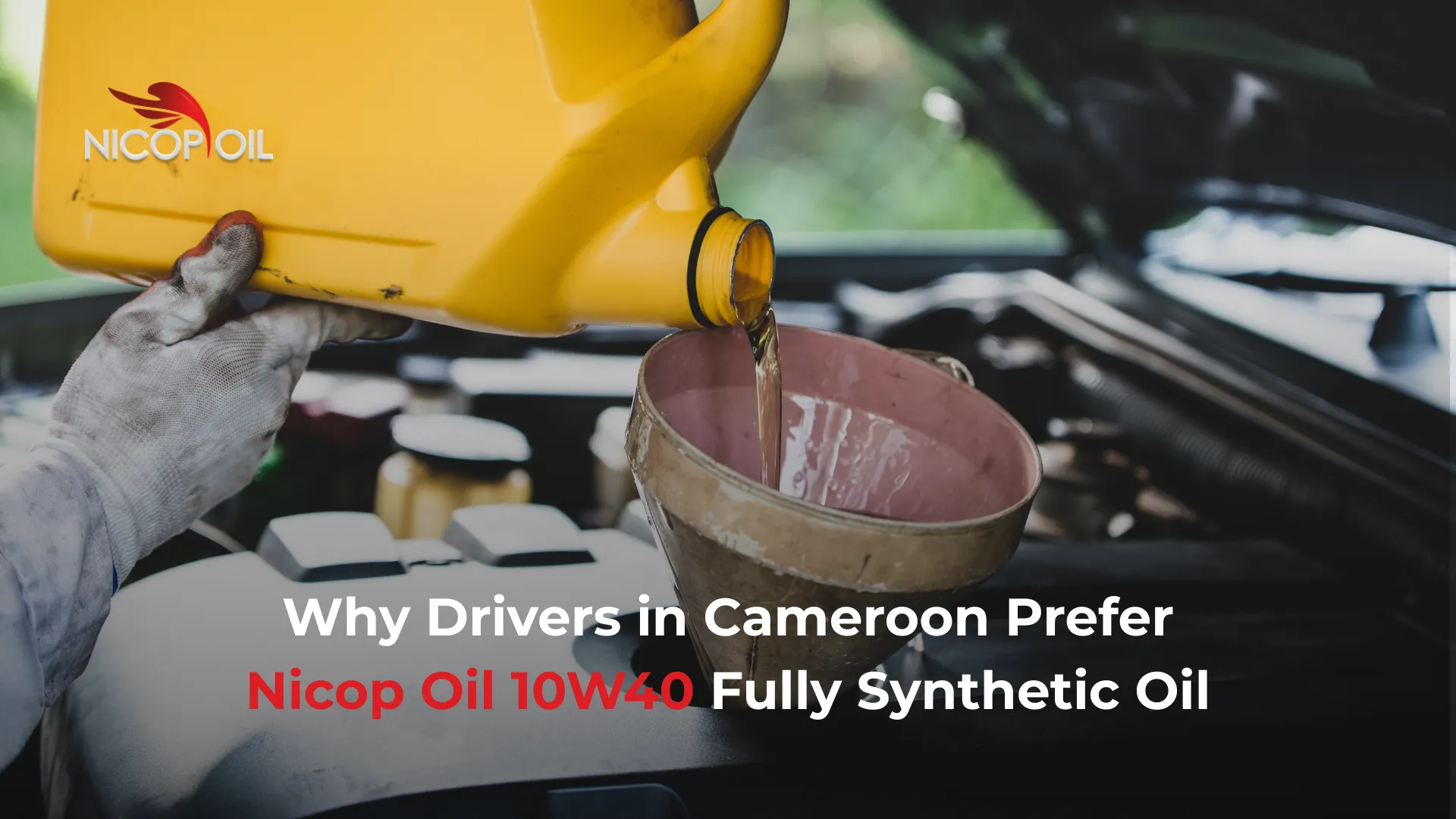
- Pour Nicop Oil’s 10W40 Fully Synthetic Oil
- Use a funnel for easier pouring.
- Fill to the manufacturer’s recommended level on the dipstick.
- Run the Engine for a Minute
- Let the engine idle to circulate the new oil.
- Then switch off and check the oil level again; top up if necessary.
- Dispose of the Old Oil Responsibly
- Use a sealed container and take it to a proper recycling facility. Avoid dumping it in drains or on soil.
- Record the Date & Mileage
- Keep a log in your maintenance notebook or app for when you used fully synthetic 10W40.
- Note the next oil change interval.
Addressing Common Concerns
Is fully synthetic too expensive?
Yes, fully synthetic oils like Nicop Oil’s 10W40 Fully Synthetic Oil typically cost more per liter than mineral oils, but the trade-off is better protection, longer engine life, and potentially fewer oil changes.
Will it burn faster?
Not necessarily. Because synthetic oils maintain their viscosity and resist breakdown, they often lead to more stable consumption over time. In fact, many drivers report less top-up after switching.
Isn’t this only for performance or sports cars?
Not at all. While high-performance vehicles benefit a lot, everyday cars, bikes, and taxis also gain from the thermal stability, wear protection, and efficiency of fully synthetic formulations.
Why Nicop Oil Stands Out (and Why You Can Trust It)
- Local Relevance: Nicop Oil understands the driving conditions and climate in places like Cameroon, where heat and varied roads demand lubricant resilience.
- High-Quality Base Stocks: By using premium synthetic base oils, Nicop Oil ensures maximum stability, strength, and performance.
- Additive Package: Their formula likely includes anti-wear, anti-oxidant, and detergent additives to keep engines clean and protected.
- After-Sales Support: Good suppliers offer guidance, guarantee authenticity, and help with safe disposal of used oil.
- Value Over Time: Even though the upfront cost is higher, the long-term savings from fewer oil changes, less engine wear, and better fuel economy make it worthwhile.
Why Drivers in Cameroon Should Buy Nicop Oil with Confidence
- Proven Performance — Fully synthetic 10W40 provides superior film strength, shear stability, and long-life performance.
- Backed by Science — Synthetic oils offer far better oxidation resistance and temperature resilience than mineral oils.
- Real-World Feedback — Anecdotes from drivers like Jean-Pierre and Amina show tangible improvements in daily driving.
- Long-Term Savings — Though pricier upfront, the ability to stretch oil-change intervals and protect the engine adds real value.
- Peace of Mind — With Nicop Oil’s trusted brand, you get quality, reliability, and support where it matters.
If you decide to switch, talk to your trusted mechanic and ask specifically for Nicop Oil 10W40 Fully Synthetic Oil when doing your next oil change. Your engine will thank you, and your wallet might too, over time.
FAQs
What is the difference between 10W40 synthetic oil and conventional oil?
The main difference is that synthetic 10W40 oil is engineered for better heat resistance, cleaner performance, and longer drain intervals, while conventional (mineral) oil breaks down faster and provides weaker protection under stress.
How often should I change 10W40 fully synthetic oil?
Most vehicles can go 8,000–12,000 km with 10W40 fully synthetic oil, depending on driving conditions and manufacturer recommendations. Synthetic oil lasts longer because it resists oxidation and sludge formation.
Can I switch from mineral oil to 10W40 fully synthetic oil?
Yes, you can safely switch from mineral oil or semi-synthetic oil to 10W40 fully synthetic oil. It improves lubrication, reduces friction, and helps older engines run smoother.
Is 10W40 synthetic oil good for hot climates like Cameroon?
Absolutely. 10W40 fully synthetic oil is ideal for hot regions because it doesn’t thin out at high temperatures. It maintains lubrication, protects metal components, and reduces engine wear during heavy traffic or long-distance driving.
Final Thoughts: Should You Choose Nicop Oil’s 10W40 Fully Synthetic Oil?
If you live in Cameroon and drive regularly, whether for work, commuting, or long-distance, switching to Nicop Oil’s 10W40 Fully Synthetic Oil could be one of the smartest decisions for your engine. Here’s why:
- You get reliable high-temperature protection in Cameroon’s heat.
- You benefit from smoother engine operation, less wear, and potentially longer intervals between services.
- You invest in long-term engine health, which protects your vehicle’s value, performance, and reliability.
- You drive with confidence, knowing your lubricant is engineered to perform under stress and deliver consistent performance.
Ready to make the change? Consider giving your engine the protection it deserves with Nicop Oil’s premium 10W40 Fully Synthetic Oil, a choice many Cameroonian drivers are already making, and with very good reason.
Disclaimer: Always consult your vehicle’s owner manual and follow manufacturer-recommended oil grades and change intervals. The guidance here is for informational purposes.