Keeping your car running smoothly in Cameroon, whether you’re navigating the busy streets of Douala, climbing the hills of Yaoundé, or traveling across rough and dusty Central and West African highways, depends heavily on one thing: engine oil health.
Because our roads face heat, humidity, traffic jams, sudden rain, and dusty terrain, your oil suffers faster than in many other regions. So understanding the Signs Your Engine Oil Needs replacement can save your engine from severe and expensive damage.
This guide explains 7 clear warning signs, using simple language, real-life African driving scenarios, expert advice, and a final recommendation on why Nicop Oil is an excellent choice for our climate and driving conditions.
Why Engine Oil Matters More in Africa
Oil breaks down faster in Cameroon due to:
- High temperatures
- Humid-coastal weather (Douala)
- Hill climbing & stop-and-go traffic (Yaoundé)
- Dusty northern & western routes
- Long-distance travel with heavy loads
According to RAC and FRAM, extreme climates accelerate oil degradation, and Africa has some of the toughest driving conditions.
1. Dark, Dirty, or Thick Oil on the Dipstick
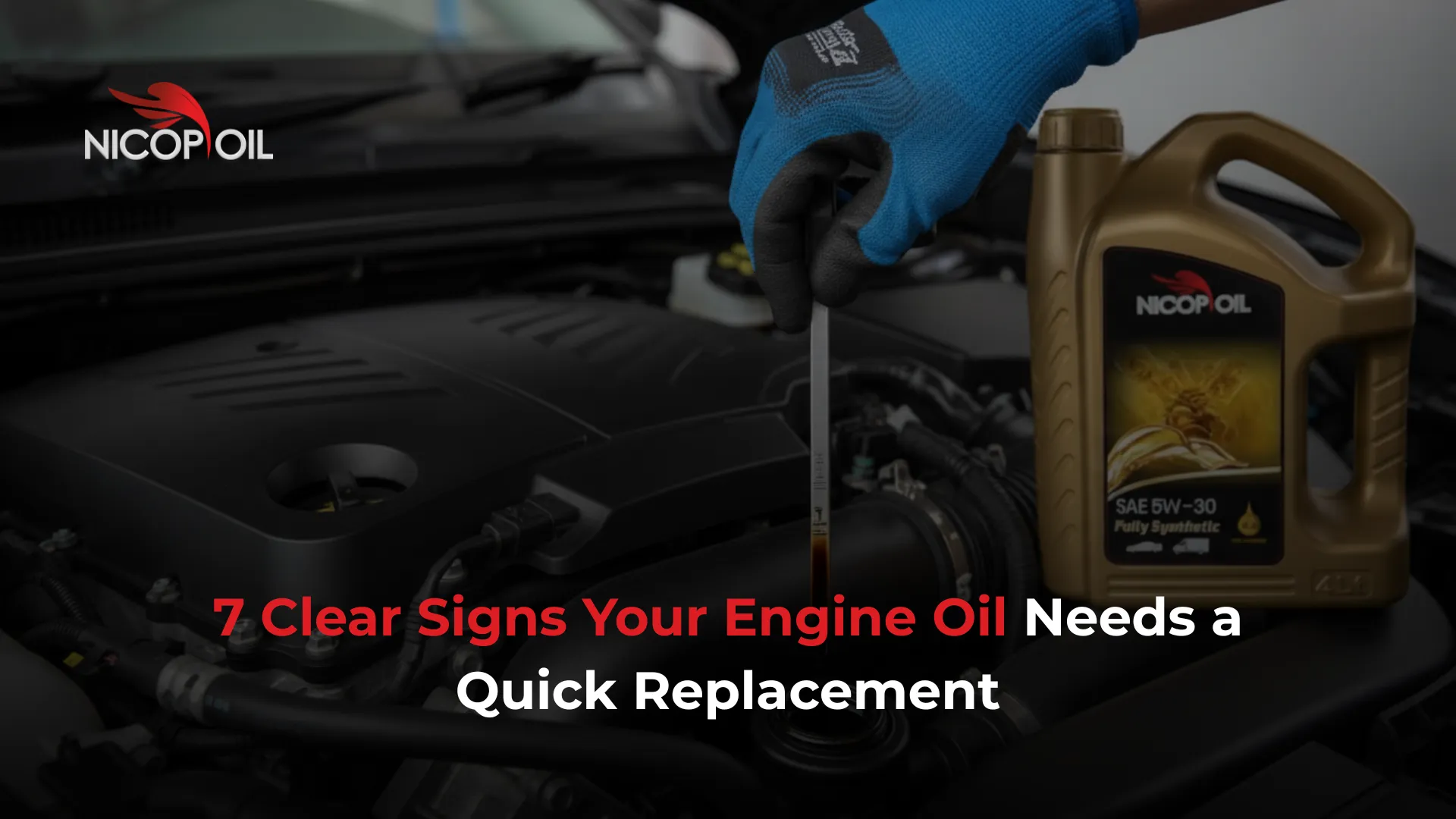
If you pull out your dipstick and the oil looks black, thick, or full of dirt, that’s one of the strongest Signs Your Engine Oil Needs replacing.
Cameroon’s dusty roads, especially during dry season, make oil dirty much faster. Dust mixes with oil, forming sludge that damages your engine.
How to check (step-by-step):
- Park on a flat surface
- Turn off the engine and let it cool
- Pull out the dipstick
- Wipe and reinsert
- Check the oil’s color & texture
If it’s dark or gritty, your oil is no longer protecting your engine.
2. Engine Noise, Knocking, or Ticking Sounds
When engine oil loses lubrication power, metal parts rub against each other, causing:
- knocking
- ticking
- dragging noises
These symptoms worsen during hot afternoons in Douala or hill climbs in Yaoundé, where engines experience higher stress.
If your car starts “sounding tired,” it’s a clear Sign Your Engine Oil Needs quick attention.
3. Smoke from the Exhaust
A thin vapor is normal. But if you see:
- blue smoke
- thick smoke
- strong exhaust smell
…it means oil is burning inside the engine, a major red flag.
This is common in older cars on Cameroonian roads, especially vehicles traveling long distances between Douala ↔ Bafoussam or Yaoundé ↔ Bamenda.
4. Burning Oil Smell Inside or Outside the Car
A burning smell often happens when leaking oil touches hot engine parts.
You may notice this smell when:
- stuck in traffic at Bonaberi Bridge (Douala)
- climbing Nkolbisson hills (Yaoundé)
- waiting at road checkpoints
Burning smell = urgent Signs Your Engine Oil Needs replacing.
Reference: Oil leak smell explanation
5. Oil Warning Light or Check Engine Light
When the oil symbol appears, it means:
- low oil pressure
- low oil level
- degraded oil
Many drivers in Cameroon ignore this light… until the engine fails.
Your dashboard is smarter than you think, when it lights up, it’s giving you one of the clearest Signs Your Engine Oil Needs immediate replacement.
6. Low Oil Level or Frequent Top-Ups
If you check your dipstick and oil level is always low, or you find yourself topping up every few days, it means:
- oil is leaking
- oil is burning
- oil is breaking down too fast
African heat causes oil to evaporate faster, so it’s important to pay attention.
This is a key Sign Your Engine Oil Needs a full replacement, not just adding more oil.
7. Poor Acceleration & High Fuel Consumption
If your car feels heavy, slow, or less responsive, your engine oil might be too dirty to lubricate properly.
In cities like Douala and Yaoundé where:
- traffic is intense
- temperatures are high
- stop-and-go is constant
Oil loses efficiency quickly.
Dirty oil increases friction → friction forces engine to work harder → fuel consumption rises.
This is one of the most ignored Signs Your Engine Oil Needs replacing.
Real-Life Anecdote From Cameroon
A taxi driver in Douala, Mr. Roger, once complained that his Toyota began losing power and producing blue smoke. He assumed it was “just bad fuel.”
But we checked his oil, it was thick like mud.
After changing it with Nicop Oil, the smoke disappeared, engine noise reduced, and fuel consumption dropped. He later told me:
“My car feels new again. I wasted so much money ignoring the oil signs.”
This is why educating car owners matters.
Step-by-Step Guide: What to Do When You Notice These Signs
1. Check the Oil Quality
Use the dipstick to inspect color and thickness.
2. Look for Leaks Under the Car
Especially after parking overnight.
3. Monitor Exhaust Smoke
Blue or thick smoke = urgent.
4. Change Oil & Filter
Always replace both at the same time.
5. Use High-Quality Oil
African roads require oil with high resistance to heat, friction, and dust.
6. Reset Your Oil-Life Indicator
Modern cars require this after every oil change.
7. Drive and Recheck After 3 Days
Make sure no warnings or leaks return.
Why Nicopoil Is the Best Choice for Africa
Here’s why Nicopoil is perfect for Cameroon, Central & West Africa:
✔ Designed for Hot African Temperatures
Nicopoil maintains viscosity even in 35°C+ heat.
✔ Better Protection on Dusty Roads
Its detergents trap dust, preventing sludge.
✔ Perfect for Stop-and-Go City Driving
Protects engines in heavy Douala and Yaoundé traffic.
✔ Improved Fuel Efficiency
Clean lubrication reduces friction on long African routes.
✔ Longer Engine Life
Nicop Oil protects critical engine parts from wear.
✔ Recognized by Mechanics Across Africa
Trusted for durability, stability, and long-term performance.
If you want your engine to run smoothly, avoid breakdowns, and last longer, Nicop Oil is the smartest choice after seeing any Signs Your Engine Oil Needs immediate replacement.
FAQs
How do I know which engine oil grade is right for my vehicle?
Always check the owner’s manual, consider your climate, driving style, vehicle mileage, and manufacturer recommendations.
Does using the wrong engine oil affect engine performance?
Yes—wrong viscosity can affect lubrication, fuel efficiency, and engine lifespan, and can even cause long-term damage.
How often should I change my engine oil?
Most vehicles need an oil change every 5,000–10,000 km, depending on oil type (synthetic, semi, mineral) and driving habits.
Is fully synthetic oil better than conventional oil?
Fully synthetic oil offers better protection, performance, and temperature stability, especially for modern engines or long-distance driving.
Final Conclusion
Whether you’re driving through Douala, navigating the hills of Yaoundé, or covering long Central & West African distances, your engine oil is your engine’s lifeline.
Whenever you notice any of the 7 clear Signs Your Engine Oil Needs replacement, take action immediately.
And when you do replace it, choose a brand built specifically for African roads, heat, traffic, and dust: