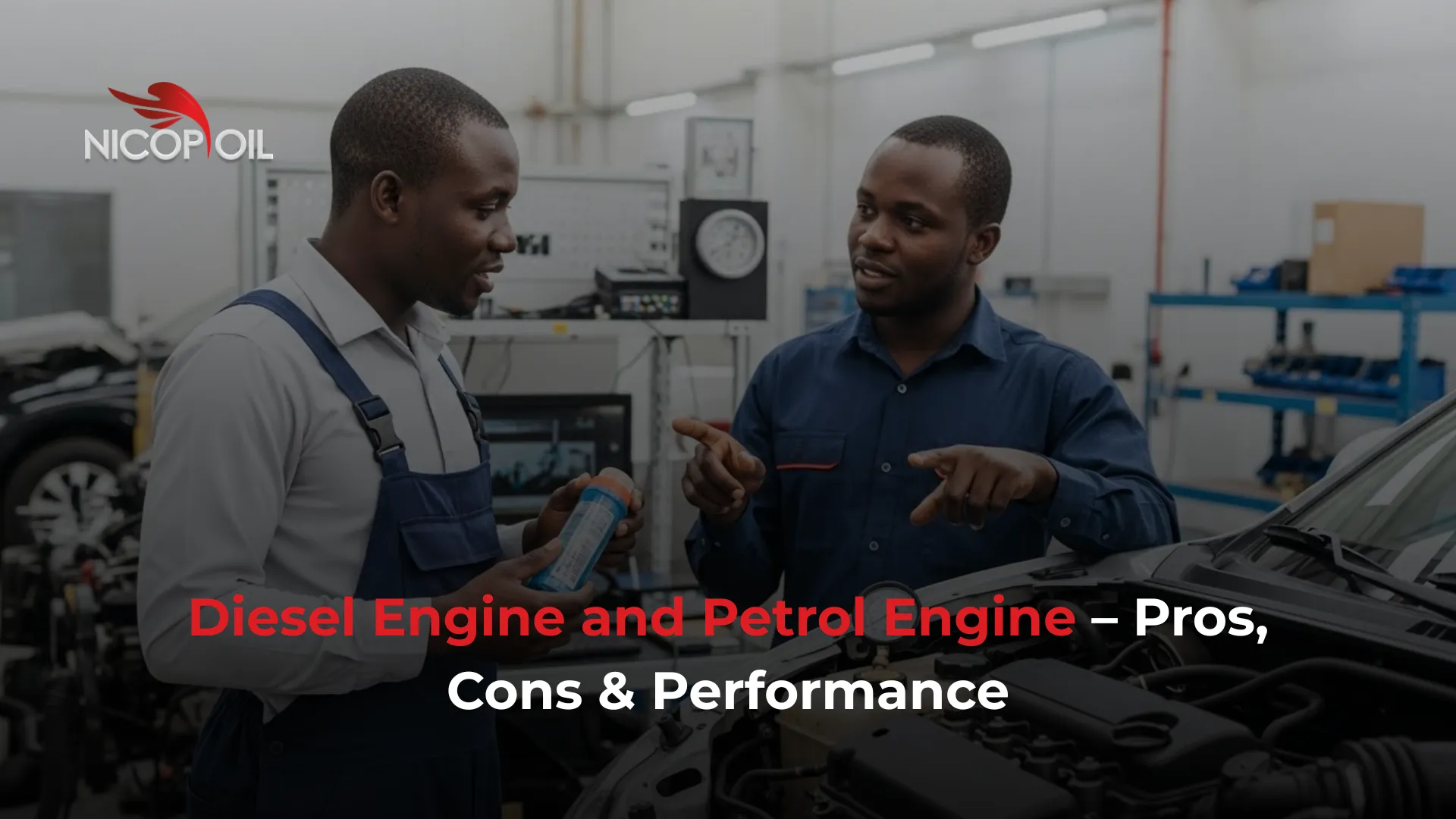
Choosing the right engine is one of the most important decisions when buying a car. The Diesel Engine and Petrol Engine work differently, and each has its own benefits and drawbacks. Understanding these differences can help you save money, drive more efficiently, and keep your car running longer.
This guide will help you compare Diesel Engine and Petrol Engine, understand their pros and cons, and make the right choice for your driving style. We’ll also explain how using Nicop Oil can protect your engine and improve its performance.
Introduction
Engines are the heart of every vehicle. Both Diesel Engine and Petrol Engine turn fuel into motion, but they do it differently.
- Diesel Engine: Uses compression to ignite fuel. This gives diesel engines more torque, making them better for heavy loads and long distances. They are common in trucks, SUVs, and vehicles that travel far every day.
- Petrol Engine: Uses a spark to ignite fuel. Petrol engines provide smoother rides, faster acceleration, and quieter driving. They are better for city cars and short-distance travel.
Choosing the right engine affects fuel costs, maintenance, driving comfort, and how long your vehicle will last.
Diesel Engine and Petrol Engine – Key Differences
Here’s a simple comparison to help you understand the main differences:
| Feature | Diesel Engine | Petrol Engine |
|---|---|---|
| Fuel Efficiency | High | Moderate |
| Torque | High | Moderate |
| Acceleration | Slower | Faster |
| Engine Noise | Louder | Quieter |
| Initial Cost | Higher | Lower |
| Maintenance | Moderate to High | Low |
| Lifespan | Long-lasting | Moderate |
Diesel engines are strong and last long, while petrol engines are smooth, responsive, and easy to maintain.
Advantages of Diesel Engines
Diesel engines are powerful and efficient. Here are the main benefits:
- Fuel Efficiency: Diesel engines travel longer distances on less fuel.
- High Torque: They provide more pulling power, which is great for towing or carrying heavy loads.
- Durability: Diesel engines are built to last and often last longer than petrol engines.
- Long-Distance Performance: Diesel vehicles perform well on highways and long trips without frequent refueling.
Example: Delivery trucks and long-distance travelers often prefer diesel engines because they save fuel and can handle heavy loads.
Disadvantages of Diesel Engines
- Diesel vehicles cost more upfront.
- Maintenance can be more expensive, especially for turbochargers and fuel systems.
- Older diesel engines may produce more harmful emissions like nitrogen oxides.
Despite these drawbacks of Diesel Engine and Petrol Engine, diesel engines are ideal for people who drive long distances or need more power.
Advantages of Petrol Engines
Petrol engines are designed for smoother driving and city use:
- Smooth and Quiet: Petrol engines are less noisy and make city driving more comfortable.
- Lower Purchase Price: Petrol cars are generally cheaper to buy than diesel cars.
- Faster Acceleration: They respond quickly and are ideal for stop-and-go traffic.
- Easier Maintenance: Petrol engines are simple and easy to repair, saving money on servicing.
Example: People who drive mostly in cities prefer petrol engines for smooth acceleration and quieter rides.
Disadvantages of Petrol Engines
- Petrol engines use more fuel over long distances.
- They produce less torque, making them unsuitable for heavy loads.
- Petrol engines may wear out faster than diesel engines if not maintained properly.
Step-by-Step Guide to Choosing the Right Engine
Making the right choice is easier when you follow these steps:
Step 1: Check Your Driving Needs
- If you drive long distances daily or carry heavy loads → Diesel.
- If you drive mainly in the city, short trips, or casual use → Petrol.
Step 2: Consider Total Costs
- Diesel engines save fuel in the long run but cost more upfront.
- Petrol engines are cheaper initially but may use more fuel over time.
Step 3: Think About Your Vehicle
- Trucks, SUVs, or vehicles for heavy loads → Diesel.
- Sedans, hatchbacks, or small cars → Petrol.
Step 4: Understand Maintenance
- Diesel engines need special checks for turbochargers and fuel systems.
- Petrol engines require regular oil changes and minor maintenance.
Step 5: Engine Lifespan
- Diesel engines can last longer with proper care.
- Petrol engines may need repairs sooner if used heavily.
Step 6: Environmental Impact
- Modern diesel engines meet emission standards, but older ones may pollute more.
- Petrol engines produce more CO₂ per liter but are generally cleaner for short trips.
Step 7: Resale Value
- Diesel vehicles often have higher resale value for buyers who travel long distances.
- Petrol vehicles maintain value for city drivers and light vehicle users.
Step 8: Make Your Decision
- Choose the engine that fits your driving style, vehicle type, and budget.
- Use Nicop Oil for maintenance to keep your engine running efficiently and last longer.
How Nicop Oil Helps Your Engine
High-quality oil is essential for both diesel and petrol engines. Nicop Oil offers:
- Lubrication: Reduces friction and prevents engine wear.
- Fuel Efficiency: Helps your engine run smoothly and saves fuel.
- Heat Protection: Guards your engine from overheating in hot conditions.
- Longer Engine Life: Makes your engine last longer and perform better.
Regular use of Nicop Oil ensures your engine stays in top condition, saving money and avoiding breakdowns.
Extra Tips for Engine Care
- Change Engine Oil on Time: Follow the schedule for oil changes.
- Use the Recommended Fuel: Avoid cheap or low-quality fuel.
- Clean Air and Fuel Filters: Keeps your engine running efficiently.
- Listen to Your Engine: Strange noises or performance drops need attention.
- Drive Smoothly: Avoid sudden acceleration and overloading, which can damage the engine.
Following these tips will help your engine run better, longer, and more efficiently.
FAQs
How does diesel engine maintenance differ from petrol engine maintenance?
Diesel engines require periodic checks for turbochargers, fuel injectors, and glow plugs. Petrol engines mainly need regular oil changes, spark plug replacements, and air filter maintenance. Both benefit from high-quality engine oil like Nicop Oil.
Is a diesel car more fuel-efficient than a petrol car?
Yes, diesel cars generally consume less fuel per kilometer due to higher energy content in diesel and engine efficiency. Petrol cars use more fuel but provide smoother acceleration and faster responsiveness.
How to decide between a diesel and petrol engine for city and highway driving?
For city driving with frequent stops, petrol engines are better due to smooth acceleration and lower maintenance. For highway or long-distance driving, diesel engines are preferred because of higher torque and better fuel efficiency.
Can using high-quality engine oil improve diesel and petrol engine performance?
Absolutely. Using premium engine oil like Nicop Oil reduces friction, improves fuel efficiency, protects against overheating, and extends engine life for both diesel and petrol vehicles.
Conclusion
Choosing between a Diesel Engine and Petrol Engine comes down to your driving needs, vehicle type, and budget:
- Diesel engines are excellent for long distances, heavy loads, and fuel efficiency.
- Petrol engines are perfect for city driving, smooth performance, and lower maintenance costs.
Using high-quality engine oil like Nicop Oil will protect your engine, improve performance, and extend its lifespan. With the right engine choice and proper maintenance, you can enjoy a smooth, efficient, and worry-free driving experience for years.