Introduction
Modern internal combustion engines, both gasoline and diesel, demand fully synthetic lubricants engineered to meet high-performance, thermal-stability, and emission-control requirements. Unlike conventional oils, these advanced formulations are built from refined base stocks and high‑performance additives that deliver superior protection across diverse operating conditions.
At Nicop Oil, we combine European‑grade product quality with reliable distribution throughout Central Africa, ensuring drivers, commercial fleets, and industrial clients have access to world‑class synthetic engine oil solutions for enhanced efficiency and longevity.
This comprehensive guide explains what fully synthetic lubricants are, how they benefit gasoline and diesel engines, and how to choose the right synthetic motor oil based on key technical standards (API, ACEA, ILSAC), engine type, and performance expectations.
What Are Fully Synthetic Lubricants?
Fully synthetic lubricants are motor oils formulated from highly refined base stocks designed at the molecular level, offering consistent performance in extreme temperatures and high‑stress environments.
Unlike mineral oils, which are mixtures of crude‑derived hydrocarbons with variable molecular sizes, synthetic engine oil achieves precise control over chemistry, enhancing oxidation resistance, shear stability, and thermal performance, critical for preventing engine wear, sludge formation, and viscosity breakdown under stress.
How Fully Synthetic Lubricant Protects Your Engine
A quality fully synthetic lubricant contributes to engine protection and performance in several measurable ways:
1. Superior Wear Protection
Fully synthetic engine oils reduce internal friction, minimizing mechanical wear on pistons, bearings, and camshafts. By maintaining a robust lubricant film at both low and high temperatures, these oils preserve engine life and performance even under heavy loads.
2. Improved Cold Start Behavior
Synthetic motor oil maintains optimal viscosity across a wide temperature range (e.g., SAE 5W‑30, 5W‑40), enabling quicker oil circulation during cold starts and reducing startup engine stress.
3. Extended Drain Intervals
Compared to conventional oils, fully synthetic lubricants resist oxidation and thermal breakdown longer, allowing for extended oil-change intervals, which reduce maintenance frequency and used-oil waste.
4. Optimized Fuel Economy
By lowering friction and improving flow characteristics, synthetic engine oils support better fuel economy, especially beneficial in stop‑start city driving and heavy highway loads.
Key Technical Standards Explained
To select the right synthetic lubricant for your gasoline or diesel engine, it’s essential to understand performance standards and specifications. These certifications signal compliance with OEM (Original Equipment Manufacturer) expectations.
API (American Petroleum Institute)
API classifications consist of two categories:
- “S” for Spark‑ignition engines (gasoline)
- “C” for Compression‑ignition engines (diesel)
Higher letters indicate more recent performance levels, e.g., API SN, SP for gasoline, and API CK‑4 for diesel.
ILSAC (International Lubricant Standardization and Approval Committee)
ILSAC standards such as GF‑6 and beyond define performance for passenger cars, including wear protection, fuel economy, and LSPI (low‑speed pre‑ignition) prevention.
ACEA (European Automobile Manufacturers Association)
ACEA classifications (e.g., A3/B4, C3) describe performance in European vehicle platforms, guiding oil selection for gasoline and diesel applications.
Choosing the Right Fully Synthetic Lubricant for Your Engine
1. Know Your Engine Type
Gasoline and diesel engines have different stress profiles. Gasoline engines often prioritize fuel economy and smooth idle characteristics, while diesel engines (especially turbocharged ones) need stronger soot control and high‑temperature stability.
2. Reference OEM Recommendations
Always check your vehicle’s owner manual for specified viscosity grades and certifications (e.g., API SN, ACEA A3/B4) before selecting a synthetic motor oil.
3. Match Viscosity Grade to Conditions
Typical modern synthetic lubricants come in grades like 5W‑30 and 5W‑40. The first number (5W) denotes cold temperature viscosity, and the second (30/40) relates to high‑temperature performance. These grades help ensure proper engine protection across ambient conditions.
Nicop Oil: European Quality Fully Synthetic Lubricant
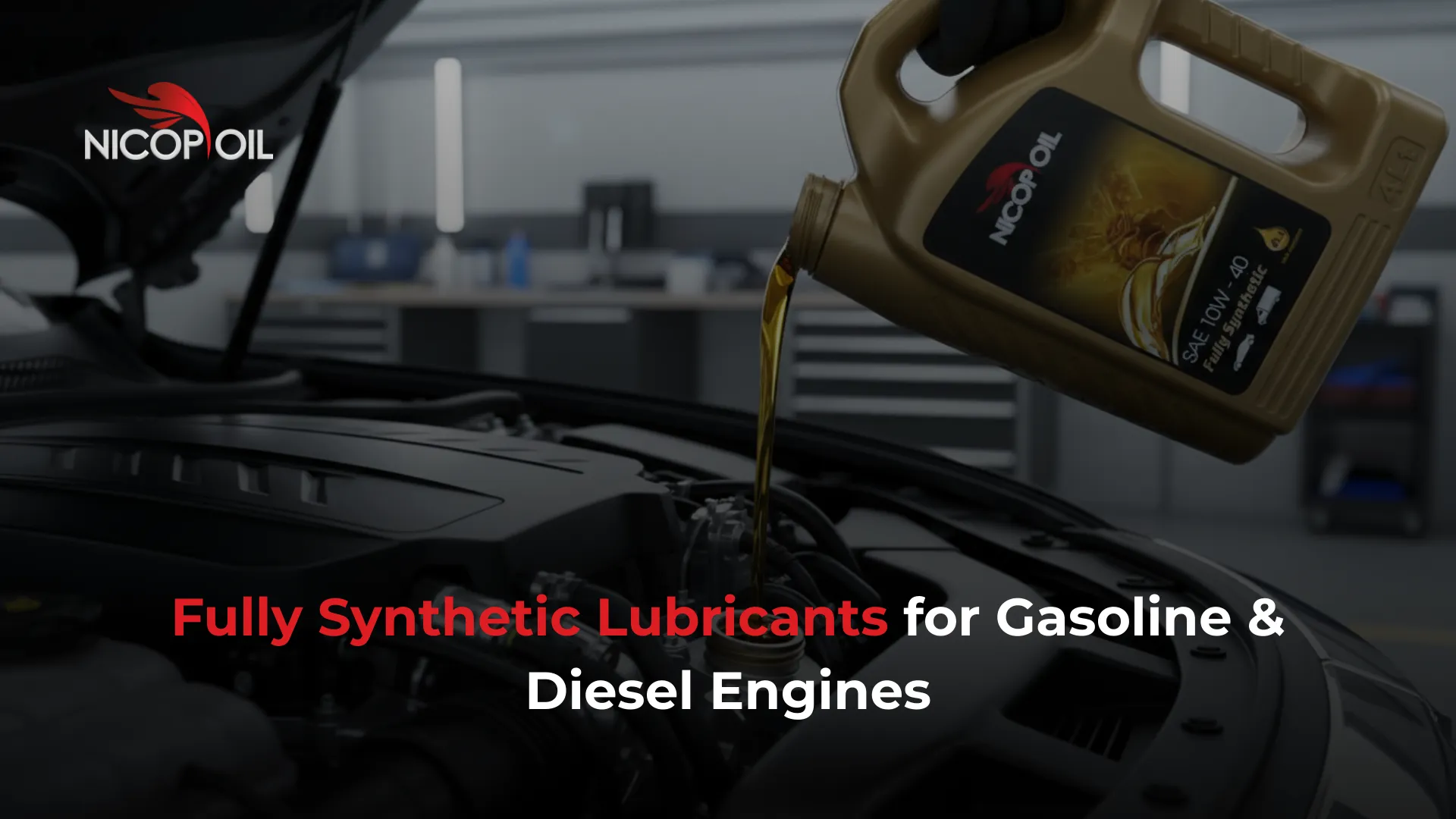
Nicop Oil delivers premium, fully synthetic lubricants designed for modern gasoline and diesel engines, combining European manufacturing standards with distribution across Cameroon and neighboring African markets.
Product Range
| Product | Application |
|---|---|
| 10W‑40 Diesel & Petrol Fully Synthetic | Balanced protection for mixed‑fleet vehicles |
| 5W‑30 Diesel & Petrol Fully Synthetic | Enhanced high-temperature protection |
| 5W‑40 Diesel & Petrol Fully Synthetic | Enhanced high temperature protection |
| 15W‑40 Trucks & Buses | High viscosity for heavy‑duty commercial use |
Each formulation meets or exceeds international quality expectations, helping fleets and individual drivers reduce downtime, improve fuel economy, and extend engine life.
Fully Synthetic Motor Oil Benefits in Real‑World Use
Engine Longevity
With strong corrosion resistance and thermal stability, fully synthetic lubricants help protect engines from sludge and varnish that degrade performance over time.
Reduced Maintenance Costs
Extended drain intervals and reduced oil consumption lower service costs, especially for commercial and fleet operations.
Better Performance Across Conditions
Synthetic engine oils maintain stable performance across hot days and cold starts, critical for markets with variable climates.
FAQs
Are fully synthetic oils compatible with hybrid or start-stop engines?
Absolutely. Fully synthetic oils provide excellent cold-start protection, rapid circulation, and thermal stability, making them ideal for hybrid and start-stop engines, which frequently experience low-speed idling and frequent engine restarts.
How do fully synthetic lubricants affect emission systems like DPF or catalytic converters?
High-quality fully synthetic lubricants are formulated to minimize ash, phosphorus, and sulfur content (low SAPS), protecting diesel particulate filters (DPF) and catalytic converters from clogging or degradation, thereby helping maintain optimal emissions performance.
Can synthetic oil prevent engine knock in high-compression engines?
Yes. Fully synthetic lubricants maintain consistent film strength and resist breakdown under high pressure, reducing the risk of pre-ignition or engine knock, especially in modern high-compression gasoline engines or turbocharged models.
Are there environmental benefits to using fully synthetic lubricants compared to conventional oils?
Using fully synthetic lubricants can reduce environmental impact by lowering fuel consumption due to reduced friction, extending oil change intervals (less used oil waste), and minimizing harmful emissions through better engine efficiency.
Conclusion: Engine Protection Starts with Synthetic Choice
In an era of increasingly sophisticated gasoline and diesel engines, fully synthetic lubricants are not just a luxury. They are essential for maintaining performance, longevity, and economic efficiency. By aligning product selection with OEM specifications (API, ILSAC, ACEA) and understanding how viscosity grades affect engine behavior, drivers and fleet managers can make smarter decisions.
Nicop Oil stands out by offering European‑standard synthetic motor oils tailored for diverse markets, emphasizing reliability, performance, and customer trust.