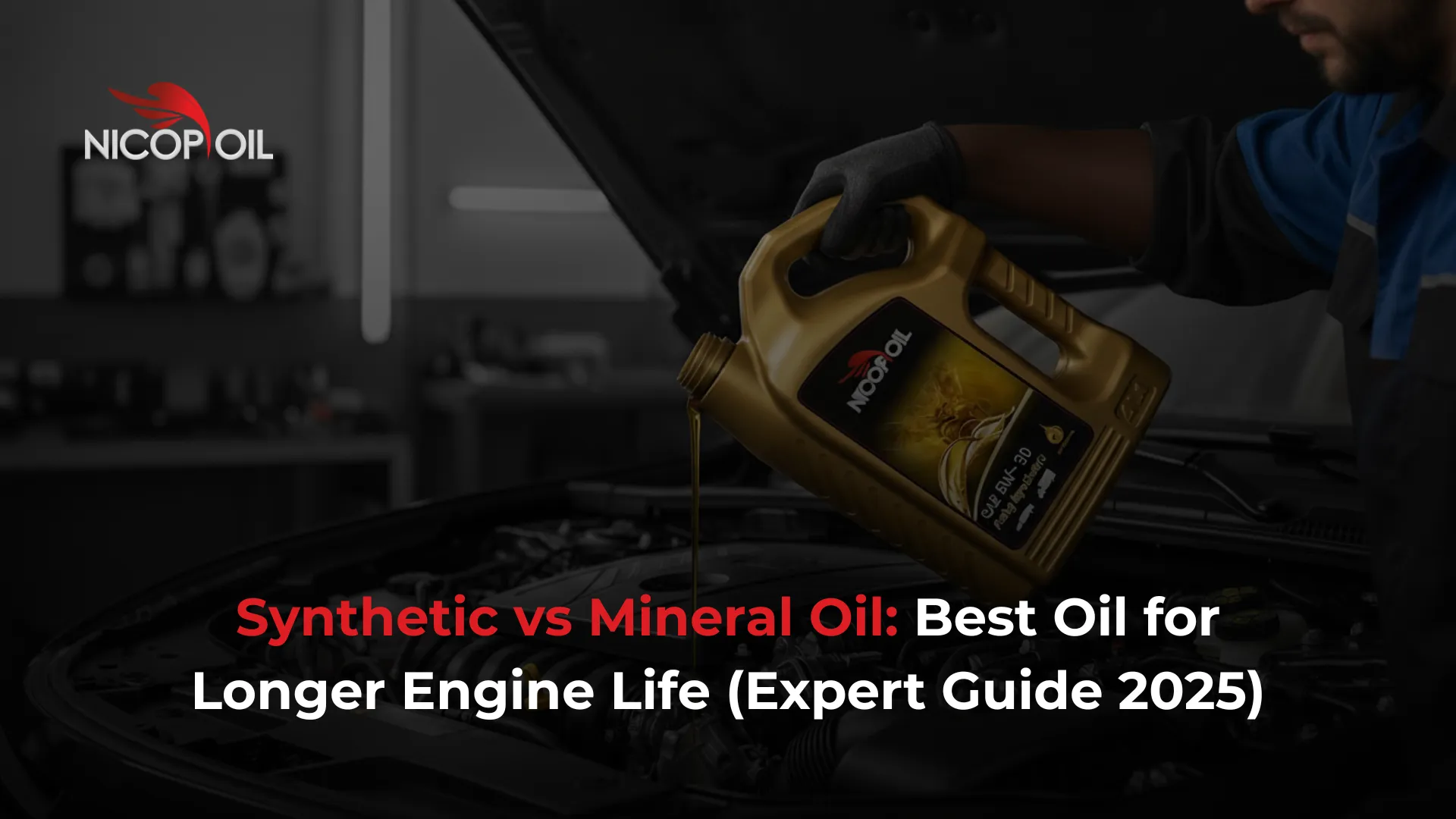
Choosing the right engine oil shouldn’t feel like rocket science, yet most drivers still find themselves confused when comparing Synthetic vs Mineral Oil. Some mechanics swear by synthetic oil, others still recommend mineral oil for older engines, and in between all this noise, ordinary car owners just want reliable protection, better mileage, and fewer breakdowns.
As a brand committed to helping drivers make smarter decisions, Nicop Oil brings you the most beginner-friendly and expert-backed guide to understanding Synthetic vs Mineral Oil.
This article explains the differences in simple language, shares real-life anecdotes, uses helpful comparisons, and finally helps you choose the best oil confidently, so your engine runs smoother, cleaner, and longer.
What’s the Big Deal About Choosing the Right Oil?
Imagine this:
You’re driving through heavy traffic on a hot day, AC on, engine running for hours. Suddenly, the car feels sluggish. You pull over later at a workshop and the mechanic shows you thick, dark sludge inside the engine.
This doesn’t happen overnight.
It happens because the wrong oil was used for months.
Choosing between: Synthetic vs Mineral Oil can literally decide whether your engine lives or dies early.
Before we compare, let’s quickly understand what each oil really is.
What Is Mineral Oil?
Mineral oil is the traditional engine oil distilled directly from crude oil. It is the most natural and least processed form of lubricant.
Benefits of Mineral Oil
- Lower price
- Works fine for older engines
- Provides basic lubrication
Drawbacks
- Breaks down quickly in heat
- Needs more frequent oil changes
- Forms sludge easily
- Doesn’t protect well in cold weather
Mineral oil is like regular tea, simple, basic, and not enhanced in any way.
What Is Synthetic Oil?
Synthetic oil is chemically engineered in labs to provide superior lubrication and protection. It contains fewer impurities and is designed to withstand extreme conditions.
Benefits of Synthetic Oil
- Handles extreme heat and cold
- Lasts longer
- Improves engine performance
- Reduces sludge
- Enhances fuel efficiency
- Perfect for modern engines
Drawbacks
- Higher price (but saves money long-term)
Synthetic oil is like premium coffee, cleaner, refined, smoother, and consistently high quality.
Synthetic vs Mineral Oil: The Real Comparison
Let’s break down Synthetic vs Mineral Oil based on what matters most to everyday drivers.
1. Temperature Resistance
- Mineral oil thickens in cold weather and thins during extreme heat.
- Synthetic oil stays stable regardless of temperature.
Winner: Synthetic
2. Engine Cleanliness
- Mineral oil forms sludge quickly.
- Synthetic oil contains detergents that keep the engine clean.
Winner: Synthetic
3. Oil Change Interval
- Mineral: Change every 4,000–5,000 km
- Synthetic: Lasts up to 10,000–15,000 km or more
Winner: Synthetic
4. Daily Driving Conditions
If you often face:
- Traffic jams
- Long highway drives
- Dusty or hot environments
- Mountain climbs
Synthetic oil handles all of this effortlessly.
5. Cost Over Time
While synthetic seems expensive upfront, it actually saves money by:
- Reducing repairs
- Extending oil change intervals
- Increasing fuel efficiency
Verdict of Synthetic vs Mineral Oil
Synthetic oil wins in almost every category, performance, protection, longevity, and cost-efficiency.
Drivers who want the best for their engines should lean toward synthetic oil unless their vehicles are extremely old or unsuitable for synthetic blends.
Real-Life Anecdote: Why a Taxi Driver in Cameroon Switched to Synthetic Oil
A taxi driver named Musa used mineral oil for years. His car overheated frequently, especially during the afternoon rush hour.
One day, while stuck in traffic, his engine suddenly shut down, a costly breakdown.
After that incident, a mechanic recommended switching from mineral to synthetic oil. Musa hesitated because of the price difference.
But guess what?
- His engine temperature stayed stable
- No more sudden shutdowns
- Fuel consumption decreased
- His maintenance cost went down
Musa now tells EVERY driver:
“I learned the hard way. Nicopoil Synthetic oil saved my business.”
This is the real power of choosing the Nicopoil right oil.
Step-by-Step Guide: How to Choose the Right Oil for Your Vehicle
Step 1. Check your user manual
Look for the recommended viscosity grade (like 5W30, 10W40).
Step 2. Consider your driving conditions
Extreme heat, dust, long drives = synthetic oil is better.
Step 3. Check your engine’s age
- Newer engines → synthetic
- Very old engines → mineral or semi-synthetic
Step 4. Decide your budget
Synthetic saves money long-term, even if the price is higher upfront.
Step 5. Choose a trusted brand
A premium synthetic oil brand like Nicop Oil offers better protection, cleaner engines, and longer oil life.
Why Synthetic Oil From Nicop Oil Is a Smarter Choice
To help drivers get better results, Nicop Oil manufactures high-performance synthetic oils that are engineered for tough African, Middle Eastern, and Asian road conditions.
Why drivers trust Nicop Oil:
- Superior engine cleanliness
- Extended oil drain intervals
- Better protection in extreme heat
- Perfect for modern engines
- Helps reduce fuel consumption
- Tested for dusty, hot, and stop-and-go traffic conditions
When drivers compare Synthetic vs Mineral Oil, the difference becomes clear, Synthetic oil by Nicop Oil gives engines the premium care they deserve.
FAQs
Can I switch from mineral oil to synthetic oil anytime?
Yes, you can switch in most vehicles. However, very old or high-mileage engines may benefit from semi-synthetic before fully switching to synthetic oil. Always follow the manufacturer’s recommendations.
Does synthetic oil improve fuel efficiency?
Yes. Synthetic oil reduces friction inside the engine, allowing smoother operation and slightly better fuel economy, especially in hot or dusty conditions.
Is mineral oil still good for older vehicles?
Yes, older engines with loose tolerances sometimes perform better with mineral or semi-synthetic oil because it provides thicker lubrication and can reduce leaks.
How often should I change oil when using synthetic vs mineral oil?
- Synthetic oil: Every 10,000–15,000 km
- Mineral oil: Every 4,000–5,000 km
- Synthetic lasts longer due to its stable, engineered composition.
Final Summary: Which Oil Should You Choose?
If your goal is:
- Longer engine life
- Better performance
- Smooth driving
- Fewer repairs
- Better fuel savings
Then synthetic oil is the clear winner in the debate of Synthetic vs Mineral Oil.
Mineral oil may be cheaper upfront, but synthetic oil delivers much higher value, reliability, and engine safety.
For the best driving experience, choose a premium synthetic oil brand like Nicop Oil.